Stanisław Lem is not a mystic or prophet, but as a master of extrapolation. It explores how Lem’s life experiences—particularly the horrors of WWII—shaped his view of technology as a neutral tool wielded by non-neutral humans.
The central thesis is that technical progress is often a “trap” we enter voluntarily because it is warmer and more comfortable inside. Lem’s works predicted the trajectory of the 21st century, including AI, VR, and biotechnology, warning that these possibilities inevitably become obligations due to competitive pressure, leading to a potential loss of human essence and agency.
1. Core Philosophical Pillars
Three central ideas that define Lem’s worldview:
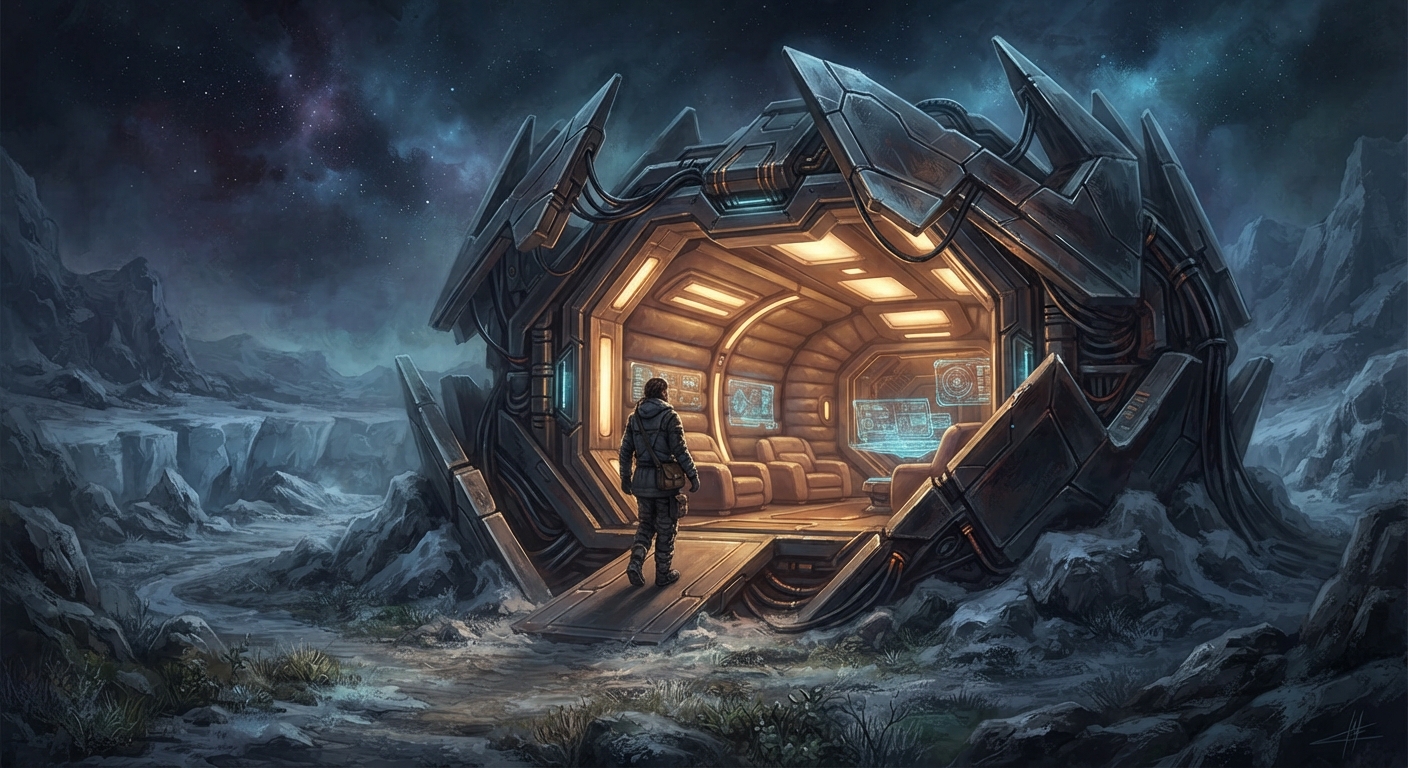
- The “Trap” of Technical Possibility: Lem argued that “every technical possibility, sooner or later, becomes an obligation.” He posits that progress is not a ladder upward, but a trap we enter voluntarily because the interior is “warmer and more comfortable.” Once a technology (like a smartphone or genetic editing) provides a competitive advantage, it is no longer a choice but a necessity for survival within a civilization.
- The Neutrality of Technology: This perspective was forged during WWII. Lem worked as a mechanic and welder in a German workshop in Lwów; he witnessed the very trucks he repaired being used to deport people to death camps. From this, he concluded that technology is neutral, but the human holding the steering wheel is not.
- The “Mirror” Theory of Contact: In his work (especially Solaris), Lem critiques the human desire to find aliens. He suggests that humanity isn’t actually looking for “others,” but for a mirror—something that confirms our own importance or speaks our language. He believes true contact with a non-human intelligence would likely be a “non-dialogue” because human logic is just a “local dialect” of one biological species.
2. Key Literary & Futurological References
The transcript connects Lem’s books to real-world technological trajectories, noting that he used extrapolation (calculating the logical end of a trend) rather than psychic prophecy.
| Work | Key Concept | Modern Parallel / Reference |
|---|---|---|
| Summa Technologiae (1964) | Fantomatyka | Virtual Reality (VR) and full-sensory simulation. |
| The Invincible (1964) | Necroevolution | Nanotechnology, swarm intelligence, and autonomous drone swarms. |
| Return from the Stars (1961) | Optons / Lektons | E-readers, audiobooks, and the “betrization” (chemical removal of aggression). |
| The Futurological Congress (1971) | Chemocracy | Control of society via perception-altering chemicals (similar to algorithmic “echo chambers”). |
| Golem XIV (1981) | Super-intelligence | AI that surpasses humans to the point of total indifference (the “Black Box” problem). |
| The Cyberiad | Satire of Bureaucracy | Using “robot fairy tales” to bypass censorship and critique totalitarianism. |
3. The Final Conclusion: “A Predatory Species”
Lem’s late-life realization, captured in the book Rasa drapieżców (Predatory Species):
After observing the actual realization of the internet and modern geopolitics, Lem moved away from the optimism of “cosmic” futures. He concluded that humans are a “predatory species” that has acquired the “tools of gods” but continues to use them according to a primitive, biological nature. He warned that the greatest danger is not a nuclear explosion or an alien invasion, but a “slow dissolution”—where we voluntarily trade our will and consciousness for the convenience of a “cozy cocoon” (digital distractions and algorithm-driven pleasure).
Summary for the User
If you are analyzing this to understand Lem’s relevance today, the takeaway is that he predicted the mechanics of our current digital era: the loss of the boundary between truth and simulation, the information overload (the “megabit bomb”), and the tendency of humans to prefer a comfortable lie over a difficult truth.
Further References for Verification:
- Official Site: solaris.lem.pl (Authoritative source on his bibliography).
- Academic Theme: Research “Anthropocentrism in Solaris” to explore the “mirror” theory mentioned in the text.
- Technical Theme: Look into “Swarm Intelligence” to see how The Invincible predicted modern robotics.
