The documentary provides a comprehensive historical overview of the Debian project, tracing its journey from its inception in 1993 to its position as a foundational pillar of the open-source ecosystem.
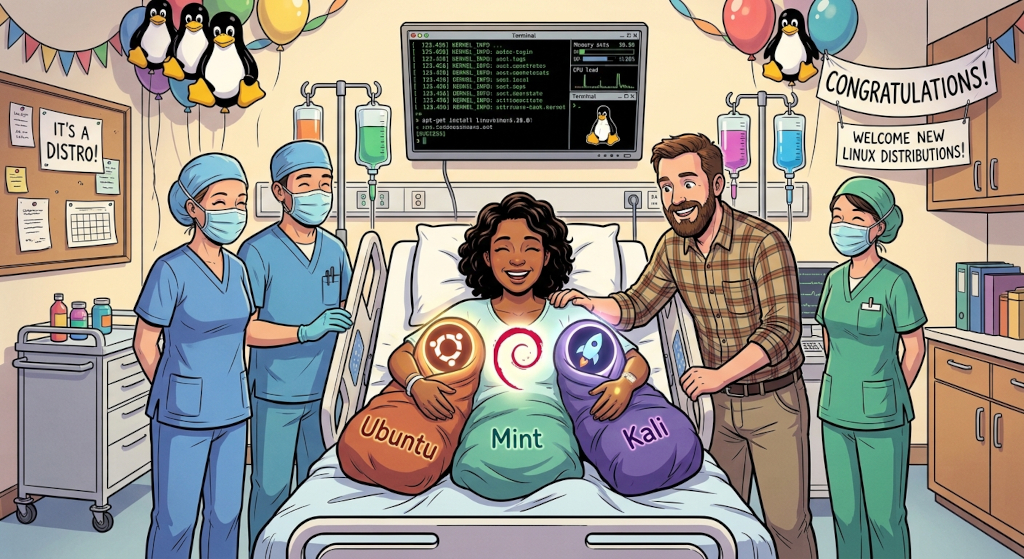
It emphasizes Debian’s unwavering commitment to software freedom, stability, and a democratic, community-driven governance model. The project is presented not just as another Linux distribution, but as “the distribution” due to its immense influence and the vast number of derivative OSs (like Ubuntu) built upon it.
Debian was officially founded on August 16, 1993, by Ian Murdock. This was a period when the concept of a “Linux distribution” was still in its infancy. Throughout the 90s and 2000s, Debian evolved through various leadership changes and technical milestones, navigating the tension between corporate influence (e.g., the relationship with Mozilla and HP) and the strict principles of the Free Software movement.
Notable Figures
- Ian Murdock: The founder of the project.
- Bruce Perens: Former project leader who introduced the tradition of using Toy Story characters for codenames, authored the Debian Free Software Guidelines (DFSG), and founded Software in the Public Interest (SPI).
- Raul Silva: The designer of the iconic Debian “swirl” logo.
- Ian Jackson & Richard Ackerman: Previous project leaders who steered the project through critical early expansions.
- Martin Mikkelmayer & Stefano Zacaroli: Leaders who improved release processes and foster collaborations (e.g., with OpenStack).
Key Facts
- Founding Date: August 16, 1993.
- Naming: Named “Debian” as a combination of “Deb” (Ian’s girlfriend) and “Ian”.
- Governance: Governed by a democratic process with an annually elected project leader.
- Logos: The red swirl symbolizes energy, passion, and a pioneering spirit.
Technical Innovations and Discoveries
- Package Management (DPKG & APT): Debian revolutionized software installation. The introduction of the APT (Advanced Package Tool) and later
apt-getandaptautomated dependency resolution, transforming a manual, error-prone process into a reliable system. - The DFSG (Debian Free Software Guidelines): A set of rigorous guidelines that define what constitutes “free software,” ensuring transparency and freedom of use.
- Stable Release Model: Debian was a pioneer in adopting the concept of a “stable” release to provide reliability for enterprise and server environments.
- Hardware Compatibility: Extensive support for diverse architectures, including x86-64, ARM64, Alpha, Spark, and RISC-V.
- Tooling: Introduction of tools like Aptitude (advanced interface) and Synaptic (graphical package management).
Consequences and Impact
- The “Mother” of Distributions: Debian’s openness allowed for the creation of over 100 derivative distributions, most notably Ubuntu, which significantly expanded the reach of Linux to the general public.
- Standardization of Formats: The
.debpackage format has become one of the most widespread standards for software distribution in the Linux world. - Commitment to Freedom (Ice Weasel): The creation of the Ice Weasel browser as a fork of Firefox demonstrated Debian’s willingness to sacrifice official branding to adhere strictly to its Free Software Guidelines.
- Security and Stability: By prioritizing a rigorous testing process (including the “Unstable/Sid” and “Testing” branches), Debian set a gold standard for system stability in critical environments.
