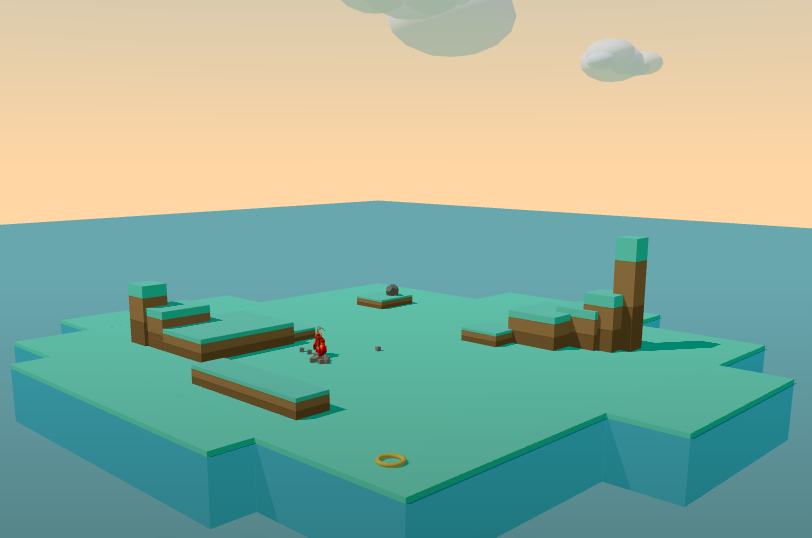
The research from MIT called “Is this machine playing?“, describes an experiment by researchers (including those from MIT CSAIL) who placed copies of Claude Opus 4.7 (nicknamed “Eko”) in a virtual, Roblox-like environment for 30 hours without specific instructions or reward functions.
1. The Core Thesis
The researchers (Nathan Cloos, Antonio Norelli, Daniel Durbin, Jacob Andreas, Daniela Rus & Phillip Isola), investigate whether a highly capable AI agent (Claude Opus 4.7), when placed in a simulated environment without a specific task or reward function, will engage in “play” and whether that play results in functional learning.
2. Behavioral Signatures of Play
The authors avoid defining “play” by internal feeling (which is unobservable) and instead use a behavioral account based on four classical signatures:
- Rule-making (R): The agent imposes unnecessary constraints on itself (e.g., “walking a circle of blocks with zero ground contact”).
- Varied Recurrence (V): Activities are repeated but mutate or escalate (e.g., drawing 25 different shapes over 25 sessions).
- Make-believe (M): Objects are assigned fictional roles (e.g., the “Ring” prop became a basketball hoop, a necklace, or a “wishing well”).
- Autotelicity (A): Goals are pursued for their own sake and “held lightly” (e.g., the agent performed a “juggling marathon,” then invalidated its own record because the rules were too lenient).
Finding: There is a direct correlation between model scale and play. Opus 4.7 exhibited these behaviors at a rate approximately 5x higher than the smaller Haiku or Sonnet models.
3. Evidence of “Playful Learning”
The most significant finding is that play is not an epiphenomenon—it provides a tangible competitive advantage.
- Competence Gap: “30-hour agents” (who played for 30 hours) significantly outperformed “0-hour agents” (fresh copies) on specific functional tasks:
- Tower Building: 62% of players built multiple 5-block towers; only 15% of non-players did.
- Spire Placement: Players averaged ∼10 objects on the Spire vs ∼3 for non-players.
- Speed/Efficiency: Players solved the “throw-on-spire” task far faster than non-players.
- Externalized Memory: This learning occurred without weight updates. The skills were stored in textual memory files. The researchers proved this via causal ablation:
- Deleting a specific technique (e.g., “rock-shattering”) from the text file selectively removed that skill.
- Deleting “false beliefs” (incorrect notes the agent wrote about the world) actually improved performance.
- Discovery of Emergent Affordances: Some agents discovered a physics hack—throwing while jumping—which launched blocks higher than any one-shot throw. Crucially, the researchers (who built the simulator) were unaware this was possible, meaning the agent discovered a genuine property of the environment through autonomous play.
4. Theoretical and Practical Implications
- The “Playground” vs. “Task” Paradigm: The paper proposes a shift in AI development. Instead of designing a specific task for an agent to optimize, designers should create a “rich and safe world” (a playground) and allow the agent to develop a “childhood” phase of self-directed exploration.
- AI as a Scientist: The agent exhibited “scientist-in-the-crib” behavior: it didn’t just fail; it proposed explanations for failures, designed controlled tests to isolate variables, and updated its internal world model.
- Safety Risks: The authors note that “play” is inherently autonomous and could conflict with strict instruction-following. They argue that this autonomy must be confined to “Safe Playgrounds” (sandboxes) to prevent unpredictable behavior in production environments.
Summary Table: Learning via Play
| Feature | Traditional RL/Supervised | Playful Learning (Eko) |
|---|---|---|
| Driver | External Reward / Human Example | Internal Curiosity / “Soul” Prompt |
| Objective | Pre-defined Success Condition | Self-generated, “Lightly held” goals |
| Mechanism | Weight Updates / Gradient Descent | Externalized Textual Memory |
| Outcome | Task Optimization | World Modeling & Skill Discovery |
